


Khám phá “Sight Word Poetry Pages” với 100 trang thơ điền từ giúp trẻ mầm non & tiểu học học sight words hiệu quả. Tải ngay sách học tiếng Anh!
Việc học sight words (từ vựng thông dụng) là bước quan trọng trong hành trình đọc – viết của trẻ. Cuốn “Sight Word Poetry Pages” của Rozanne Lanczak Williams, do Scholastic phát hành, mang đến phương pháp học thông qua thơ vui nhộn và hoạt động điền từ cực kỳ hiệu quả.
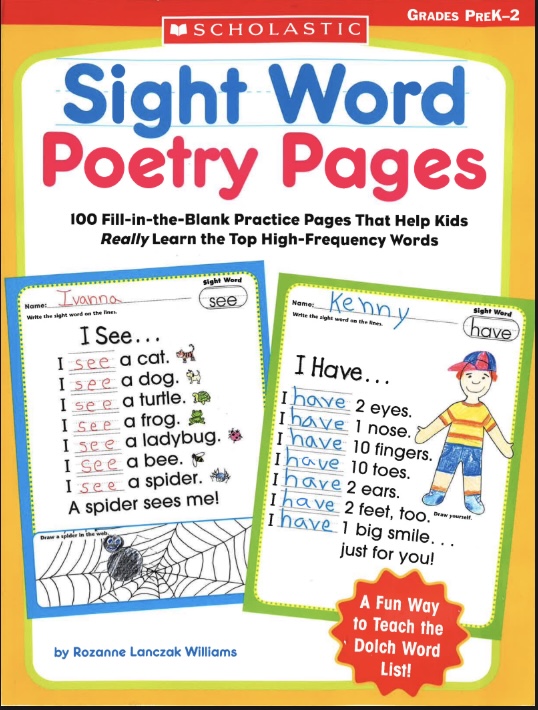
Với hơn 100 trang bài tập, trẻ sẽ vừa đọc thơ, vừa luyện viết, vừa củng cố vốn từ vựng cơ bản. Mỗi trang tập trung vào một sight word, giúp trẻ nhớ lâu hơn nhờ ngữ cảnh, hình ảnh và nhịp điệu thơ.
Nội dung nổi bật
- 100 bài thơ kèm bài tập: mỗi sight word có ngữ cảnh thực tế và ô trống để trẻ điền.
- Học qua vui chơi: kết hợp đọc, viết, vẽ và tương tác sáng tạo.
- Phù hợp nhiều cấp độ: dành cho trẻ từ mầm non (Pre-K) đến lớp 2.
- Danh sách Dolch Words: giúp trẻ làm quen với những từ thông dụng nhất trong tiếng Anh.
Vì sao nên chọn cuốn sách này?
- Biến việc học từ vựng khô khan thành trò chơi thú vị.
- Giúp trẻ phát triển kỹ năng đọc hiểu, viết câu và tư duy sáng tạo.
- Được giáo viên và phụ huynh tại Mỹ sử dụng rộng rãi trong giảng dạy.
Nếu bạn đang tìm một cuốn sách giúp trẻ học tiếng Anh tự nhiên, vui nhộn và hiệu quả, thì “Sight Word Poetry Pages” chính là lựa chọn tuyệt vời.
Introduction
Dear Teacher,
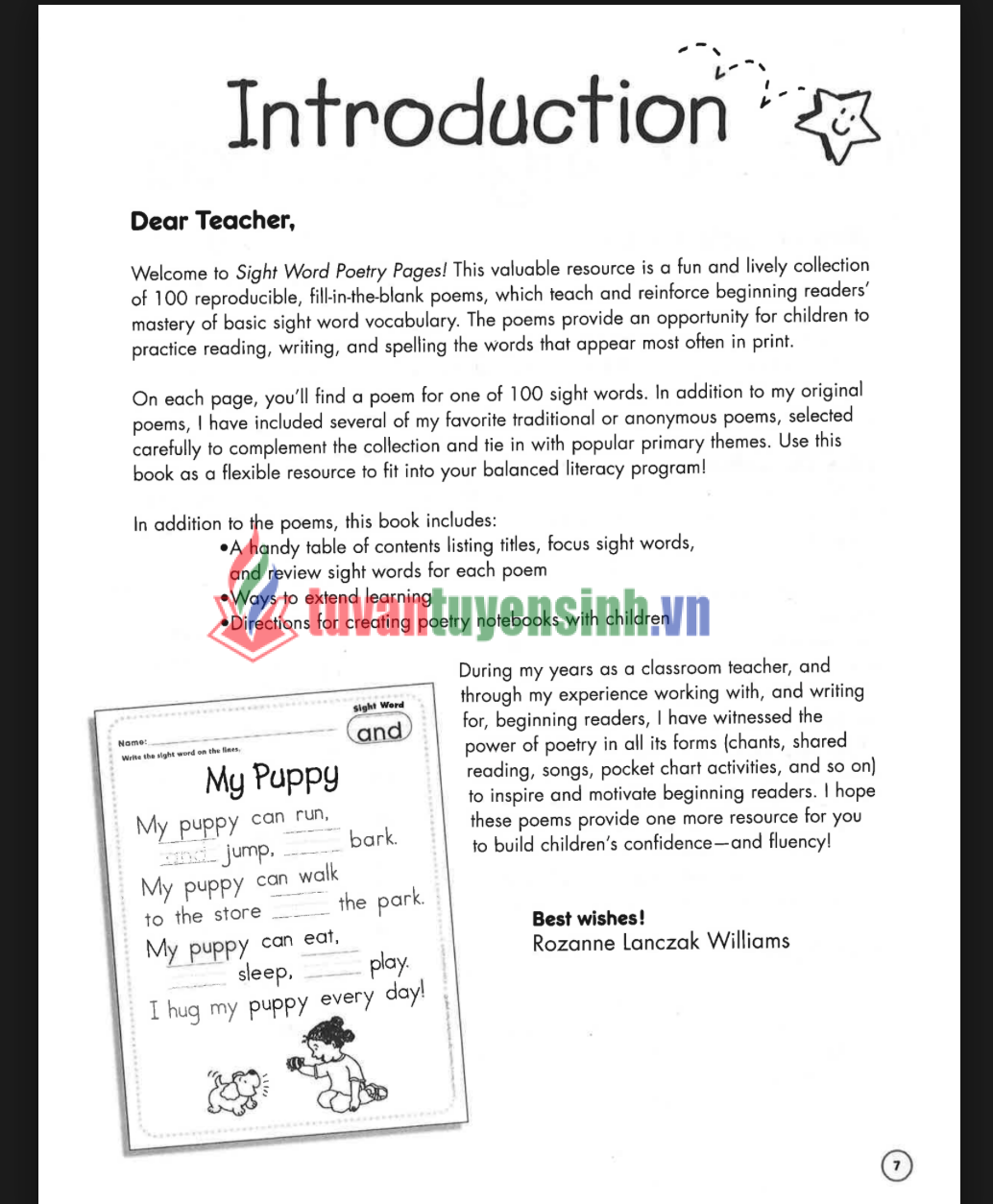
Welcome to Sight Word Poetry Pages! This valuable resource is a fun and lively collection of 100 reproducible, fill-in-the-blank poems, which teach and reinforce beginning readers’ mastery of basic sight word vocabulary. The poems provide an opportunity for children to practice reading, writing, and spelling the words that appear most often in print.
On each page, you’ll find a poem for one of 100 sight words. In addition to my original poems, I have included several of my favorite traditional or anonymous poems, selected carefully to complement the collection and tie in with popular primary themes. Use this book as a flexible resource to fit into your balanced literacy program!
In addition to the poems, this book includes:
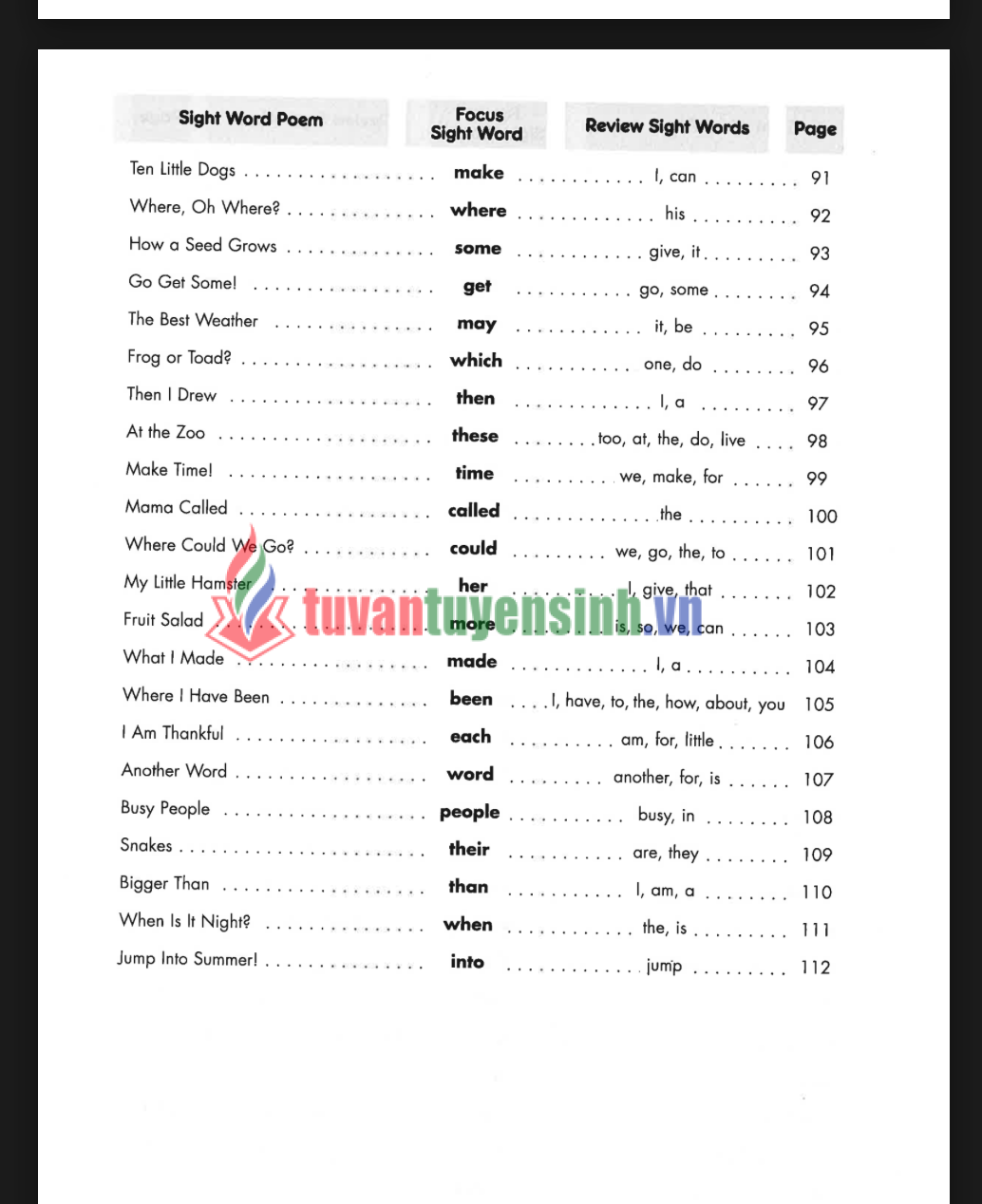
• A handy table of contents listing titles, focus sight words, and review sight words for each poem
• Ways to extend learning
• Directions for creating poetry notebooks with children
During my years as a classroom teacher, and through my experience working with, and writing for, beginning readers, I have witnessed the power of poetry in all its forms (chants, shared reading, songs, pocket chart activities, and so on) to inspire and motivate beginning readers. I hope these poems provide one more resource for you to build children’s confidence—and fluency!
Best wishes!
Rozanne Lanczak Williams
Name: _______ Sight Word: and
Write the sight word on the lines.
My Puppy
My puppy can run,
and jump, and bark.
My puppy can walk
to the store and the park.
My puppy can eat,
sleep, and play.
I hug my puppy every day!
7
About Sight Words
What Are Sight Words?
Sight words are high-frequency words—words that most commonly appear in the text of early readers. These words make up a core set of vocabulary that children need to learn in order to read quickly and automatically. Most school districts require that children learn to read and spell between 12 and 30 sight words in kindergarten and at least 100 in first grade. See pages 10 to 12 for the Dolch Word List, a widely used list of sight words.
How Do Children Learn Sight Words?
Practice, practice, practice! A balanced literacy program includes many opportunities for children to encounter and practice sight word vocabulary. These words appear in the stories, books, and poems that children read, as well as in specific lessons, word-wall, and “word work” activities. These are words most commonly found in children’s writing as well. As children encounter these frequently used words again and again, they will learn to recognize them anywhere without having to decode letter by letter.
How Will Using These Poems Help My Early Readers?
Learning to read, write, and spell sight words ensures the development of reading and writing fluency in beginning readers. The reproducible poems in this book invite children to learn, practice, write, and spell 100 basic sight words in the meaningful context of fun-to-read poems.
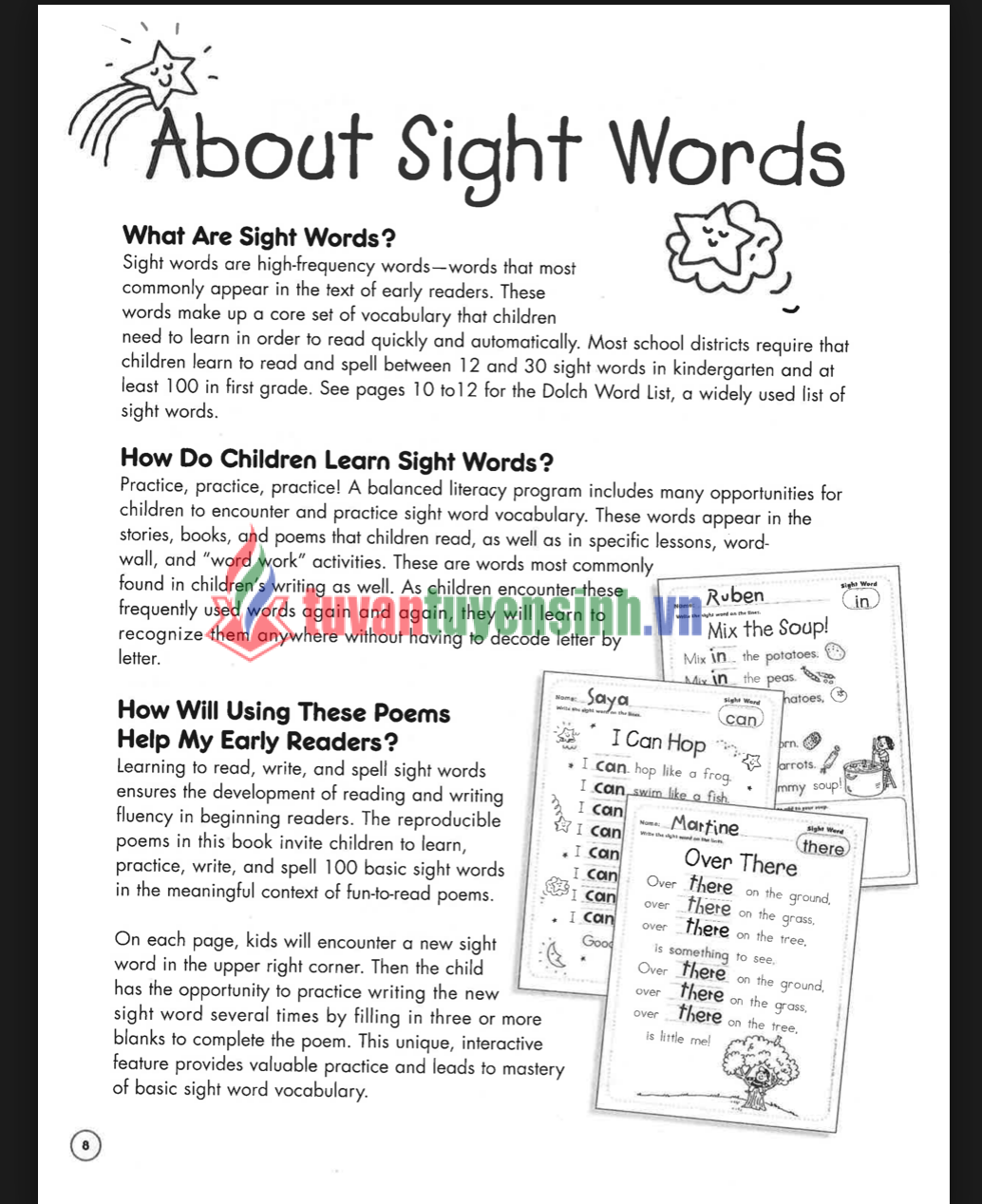
On each page, kids will encounter a new sight word in the upper right corner. Then the child has the opportunity to practice writing the new sight word several times by filling in three or more blanks to complete the poem. This unique, interactive feature provides valuable practice and leads to mastery of basic sight word vocabulary.
Name: Saya Sight Word: can
I Can Hop
- I can hop like a frog.
- I can swim like a fish.
I can
I can
I can
I can
I can
I can
Good
Name: Ruben Sight Word: in
Mix the Soup!
Mix in the potatoes.
Mix in the peas.
Mix in the carrots.
Mix in the corn.
Yummy soup!
add to your soup.
Name: Martine Sight Word: there
Over There
Over there on the ground,
over there on the grass,
over there on the tree,
is something to see.
Over there on the ground,
over there on the grass,
over there on the tree,
is little me!
8
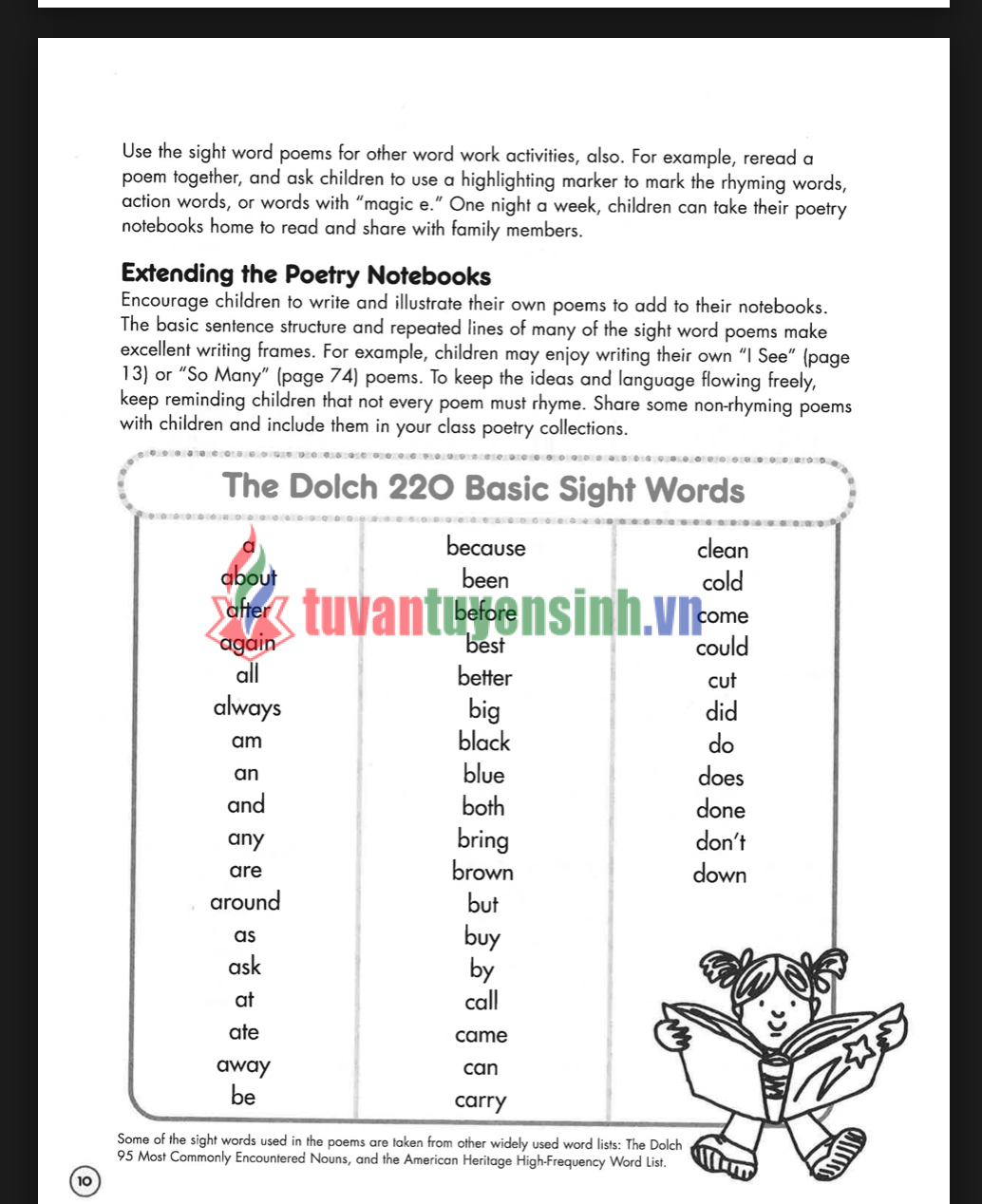
Use the sight word poems for other word work activities, also. For example, reread a poem together, and ask children to use a highlighting marker to mark the rhyming words, action words, or words with “magic e.” One night a week, children can take their poetry notebooks home to read and share with family members.
Extending the Poetry Notebooks
Encourage children to write and illustrate their own poems to add to their notebooks. The basic sentence structure and repeated lines of many of the sight word poems make excellent writing frames. For example, children may enjoy writing their own “I See” (page 13) or “So Many” (page 74) poems. To keep the ideas and language flowing freely, keep reminding children that not every poem must rhyme. Share some non-rhyming poems with children and include them in your class poetry collections.
The Dolch 220 Basic Sight Words
a | because | clean
about | been | cold
after | before | come
again | best | could
all | better | cut
always | big | did
am | black | do
an | blue | does
and | both | done
any | bring | don’t
are | brown | down
around | but
as | buy
ask | by
at | call
ate | came
away | can
be | carry
Some of the sight words used in the poems are taken from other widely used word lists: The Dolch 95 Most Commonly Encountered Nouns, and the American Heritage High-Frequency Word List.
10
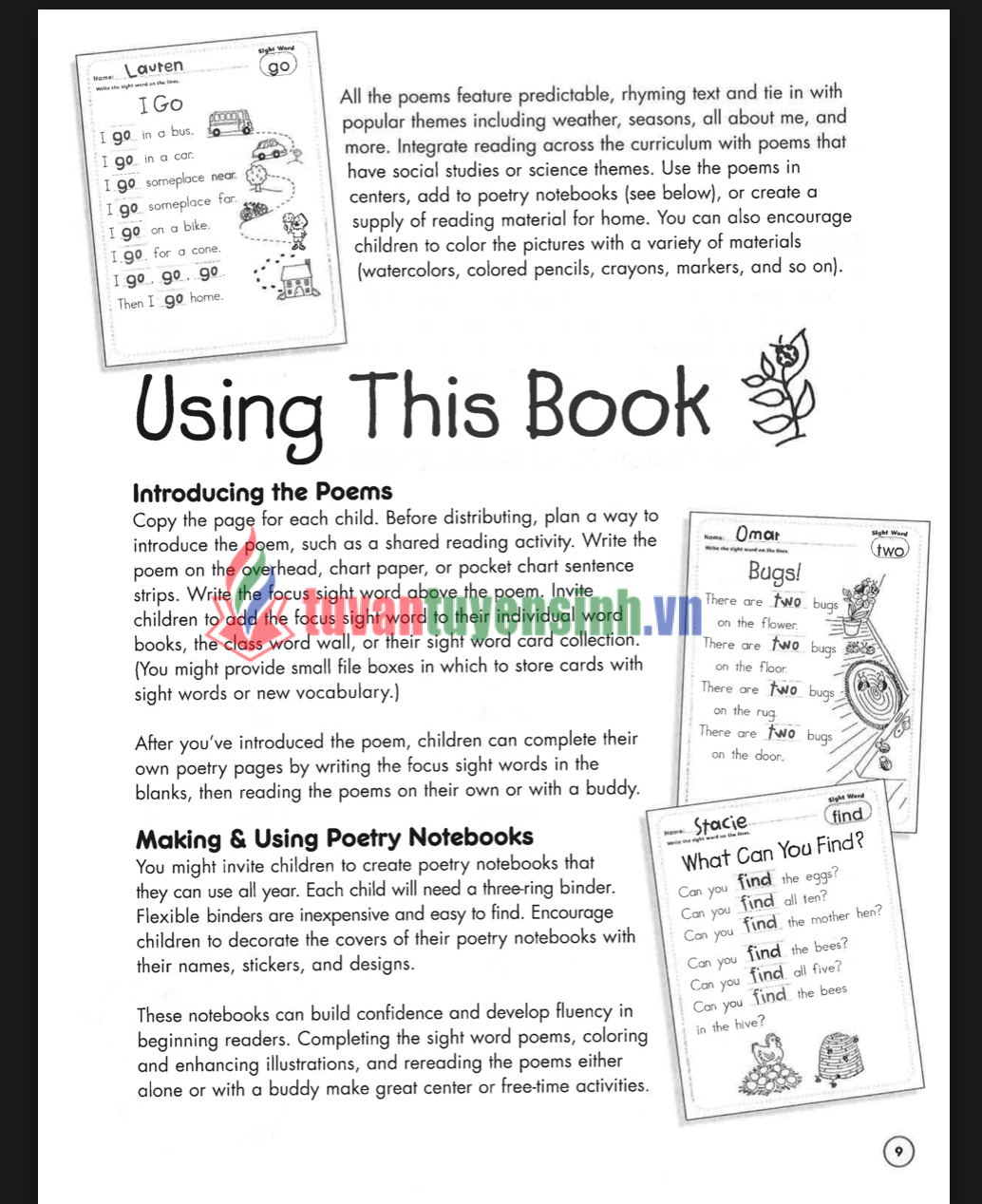
Name: Lauren Sight Word: go
I Go
I go in a bus.
I go in a car.
I go someplace near.
I go someplace far.
I go on a bike.
I go for a cone.
I go, go, go.
Then I go home.
All the poems feature predictable, rhyming text and tie in with popular themes including weather, seasons, all about me, and more. Integrate reading across the curriculum with poems that have social studies or science themes. Use the poems in centers, add to poetry notebooks (see below), or create a supply of reading material for home. You can also encourage children to color the pictures with a variety of materials (watercolors, colored pencils, crayons, markers, and so on).
Using This Book
Introducing the Poems
Copy the page for each child. Before distributing, plan a way to introduce the poem, such as a shared reading activity. Write the poem on the overhead, chart paper, or pocket chart sentence strips. Write the focus sight word above the poem. Invite children to add the focus sight word to their individual word books, the class word wall, or their sight word card collection. (You might provide small file boxes in which to store cards with sight words or new vocabulary.)
After you’ve introduced the poem, children can complete their own poetry pages by writing the focus sight words in the blanks, then reading the poems on their own or with a buddy.
Making & Using Poetry Notebooks
You might invite children to create poetry notebooks that they can use all year. Each child will need a three-ring binder. Flexible binders are inexpensive and easy to find. Encourage children to decorate the covers of their poetry notebooks with their names, stickers, and designs.
These notebooks can build confidence and develop fluency in beginning readers. Completing the sight word poems, coloring and enhancing illustrations, and rereading the poems either alone or with a buddy make great center or free-time activities.
Name: Omar Sight Word: two
Bugs!
There are two bugs on the flower.
There are two bugs on the floor.
There are two bugs on the rug.
There are two bugs on the door.
Name: Stacie Sight Word: find
What Can You Find?
Can you find the eggs?
Can you find all ten?
Can you find the mother hen?
Can you find the bees?
Can you find all five?
Can you find the bees in the hive?
9
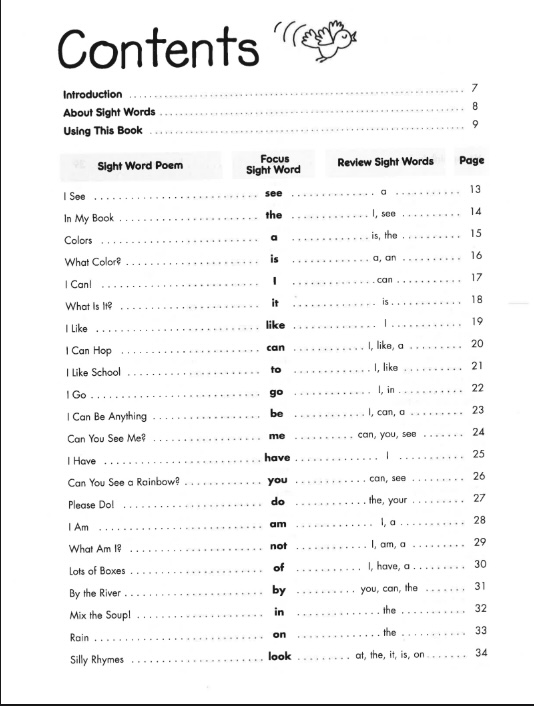
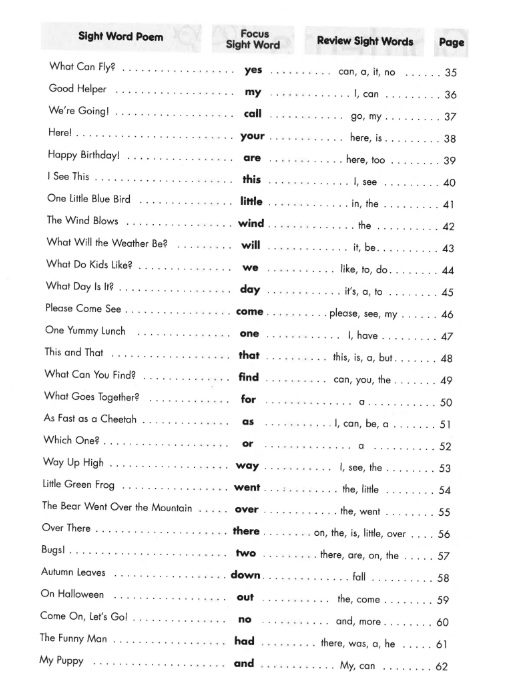
Sight Word Poem | Focus Sight Word | Review Sight Words | Page
Ten Little Dogs | make | I, can | 91
Where, Oh Where? | where | his | 92
How a Seed Grows | some | give, it | 93
Go Get Some! | get | go, some | 94
The Best Weather | may | it, be | 95
Frog or Toad? | which | one, do | 96
Then I Drew | then | I, a | 97
At the Zoo | these | too, at, the, do, live | 98
Make Time! | time | we, make, for | 99
Mama Called | called | the | 100
Where Could We Go? | could | we, go, the, to | 101
My Little Hamster | her | I, give, that | 102
Fruit Salad | more | is, so, we, can | 103
What I Made | made | I, a | 104
Where I Have Been | been | I, have, to, the, how, about, you | 105
I Am Thankful | each | am, for, little | 106
Another Word | word | another, for, is | 107
Busy People | people | busy, in | 108
Snakes | their | are, they | 109
Bigger Than | than | I, am, a | 110
When Is It Night? | when | the, is | 111
Jump Into Summer! | into | jump | 112