
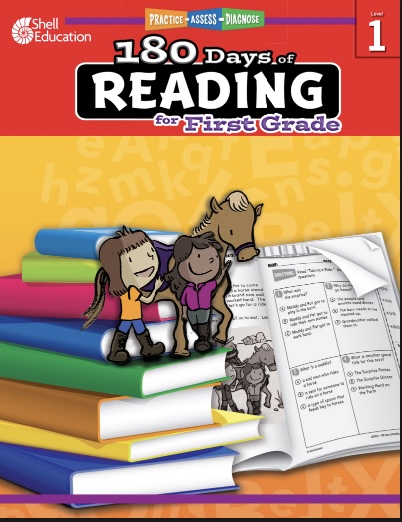
180 days of reading for first grade – tài liệu luyện đọc tiếng anh lớp 1

Sách 180 days of reading for first grade PDF Miễn Phí – tài liệu luyện đọc tiếng anh lớp 1

Sách 180 days of reading for first grade PDF Miễn Phí – tài liệu luyện đọc tiếng anh lớp 1 là một trong những Tài liệu và Sách học tiếng Anh đáng đọc và tham khảo. Hiện Sách 180 days of reading for first grade PDF Miễn Phí – tài liệu luyện đọc tiếng anh lớp 1 đang được Tư Vấn Tuyển Sinh chia sẻ miễn phí dưới dạng file PDF.

=> Bạn chỉ cần nhấn vào nút “Tải tài liệu” ở phía bên dưới là đã có thể tải được về máy của mình rồi.

Lưu ý quan trọng

Bên dưới đây mình có spoil 1 phần nội dung trong tài liệu để bạn tham khảo trước về nội dung tài liệu / Sách. Để xem được full nội dung thì bạn hãy nhấn vào nút “Link tải PDF” ở trên để tải bản đầy đủ về nhé

Bạn đang tìm tài liệu giúp trẻ lớp 1 rèn luyện kỹ năng đọc hiểu tiếng Anh mỗi ngày? Bộ sách “180 Days of Reading for First Grade” sẽ là công cụ hữu ích, giúp học sinh xây dựng thói quen đọc và phát triển vốn từ vựng một cách tự nhiên.
📌 Điểm nổi bật của sách:

  • Cung cấp 180 bài luyện đọc, tương ứng với mỗi ngày trong năm học.
  • Các đoạn văn ngắn, phù hợp với lứa tuổi, kèm theo câu hỏi trắc nghiệm và tự luận để kiểm tra mức độ hiểu bài.
  • Nội dung đa dạng, phong phú, từ truyện ngắn, thơ, đến các bài đọc khoa học đơn giản.
  • Giúp học sinh rèn luyện đồng thời nhiều kỹ năng: đọc nhanh – hiểu nghĩa – phân tích – trả lời câu hỏi.
  • đáp án chi tiết và tài nguyên bổ sung cho giáo viên và phụ huynh.

🎯 Lợi ích của tài liệu:

  • Xây dựng thói quen đọc tiếng Anh hằng ngày cho trẻ.
  • Cải thiện khả năng đọc hiểu và phản xạ ngôn ngữ.
  • Giúp phụ huynh, giáo viên dễ dàng theo dõi và đánh giá sự tiến bộ của học sinh.
  • Phù hợp để sử dụng tại lớp học hoặc tự học tại nhà.

👉 Với “180 Days of Reading for First Grade”, trẻ sẽ phát triển kỹ năng đọc một cách toàn diện, tạo nền tảng vững chắc cho các cấp học tiếp theo.

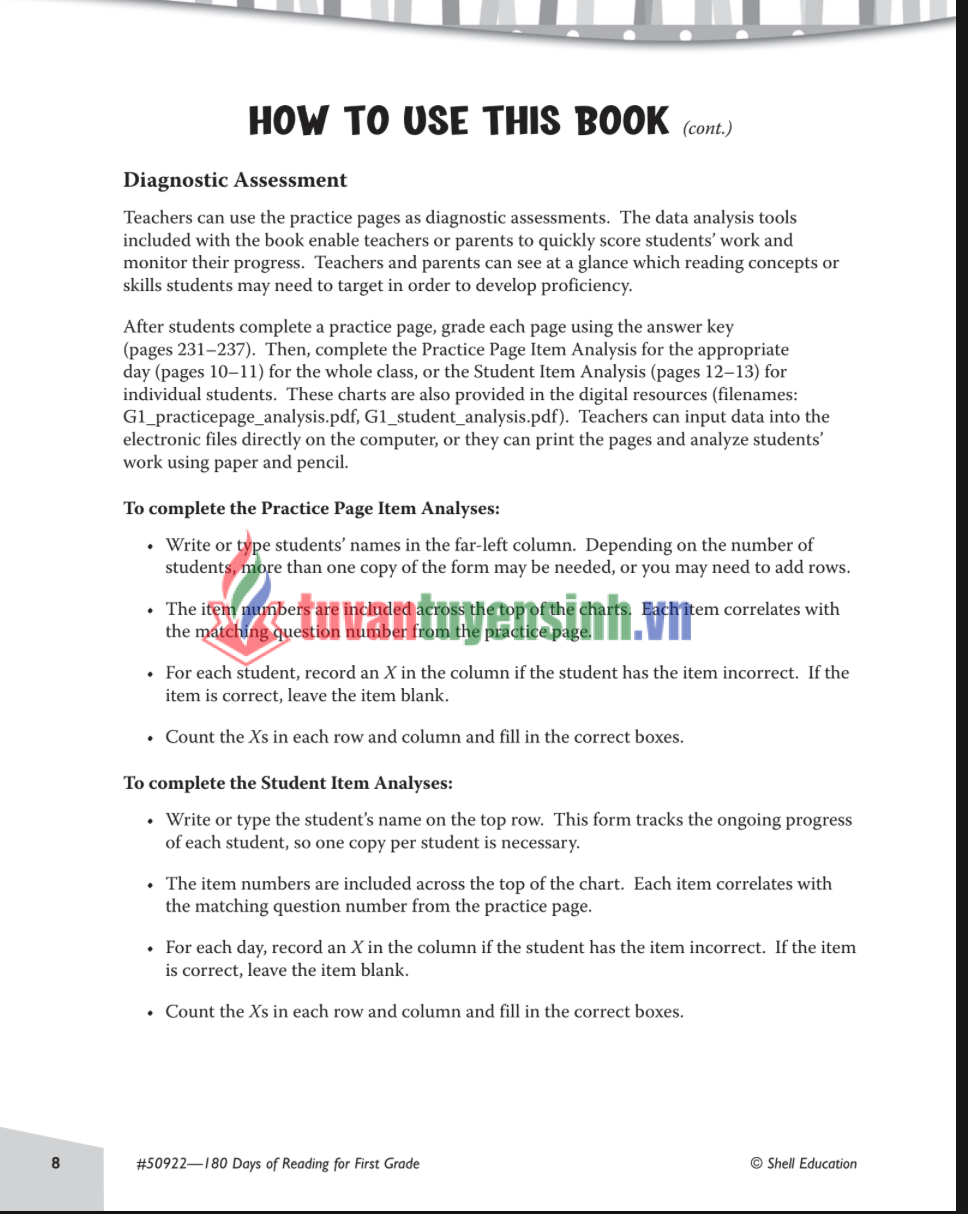
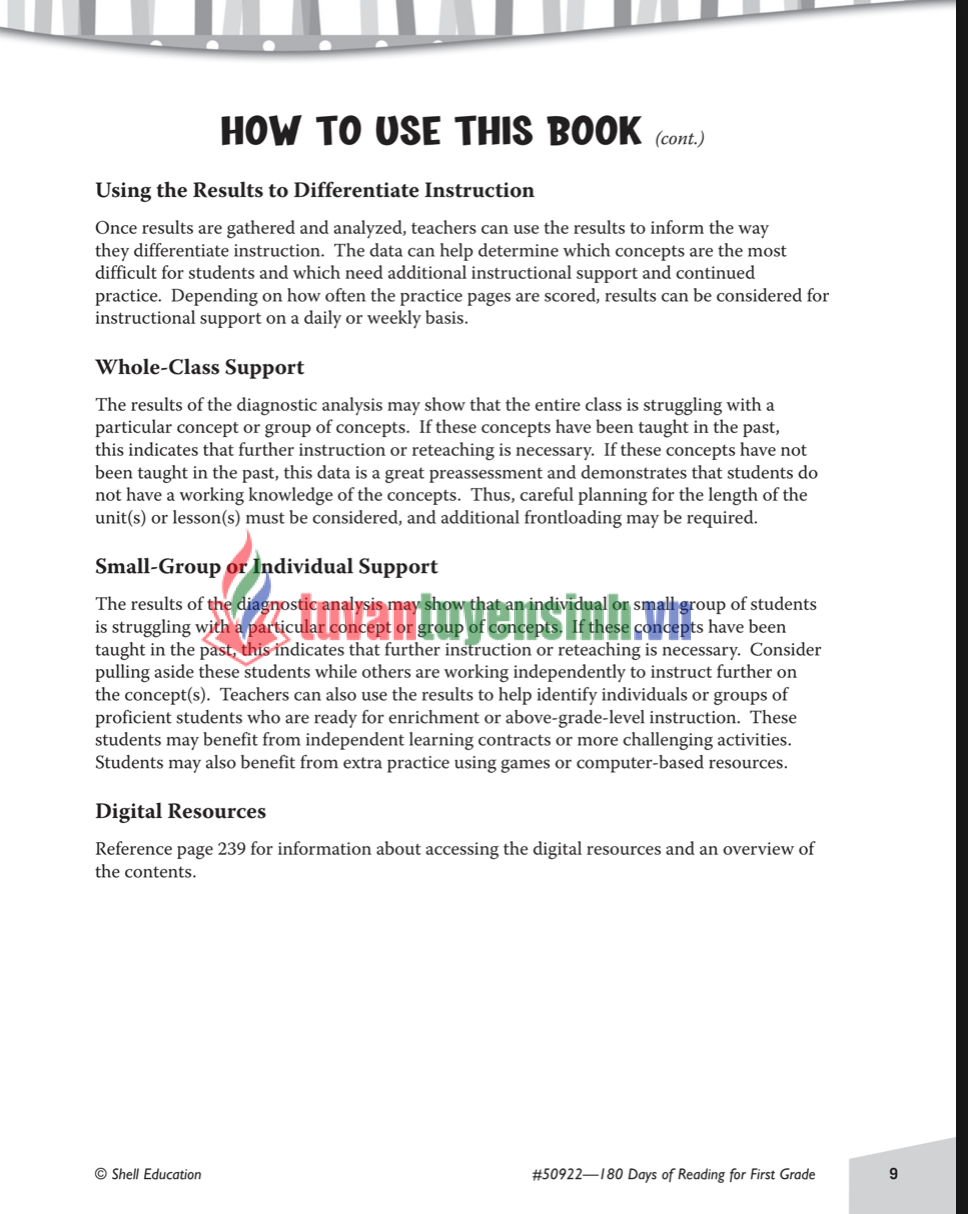
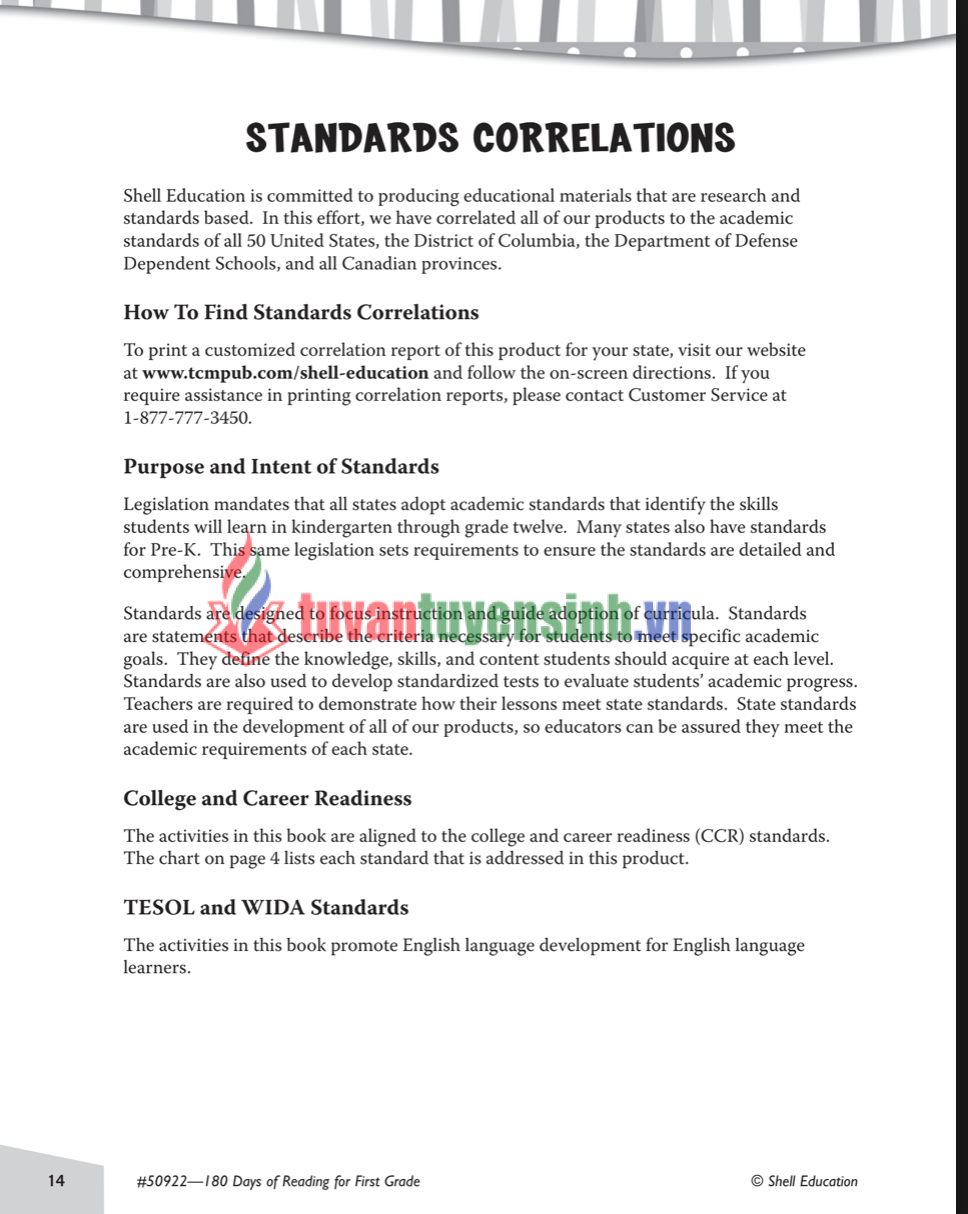
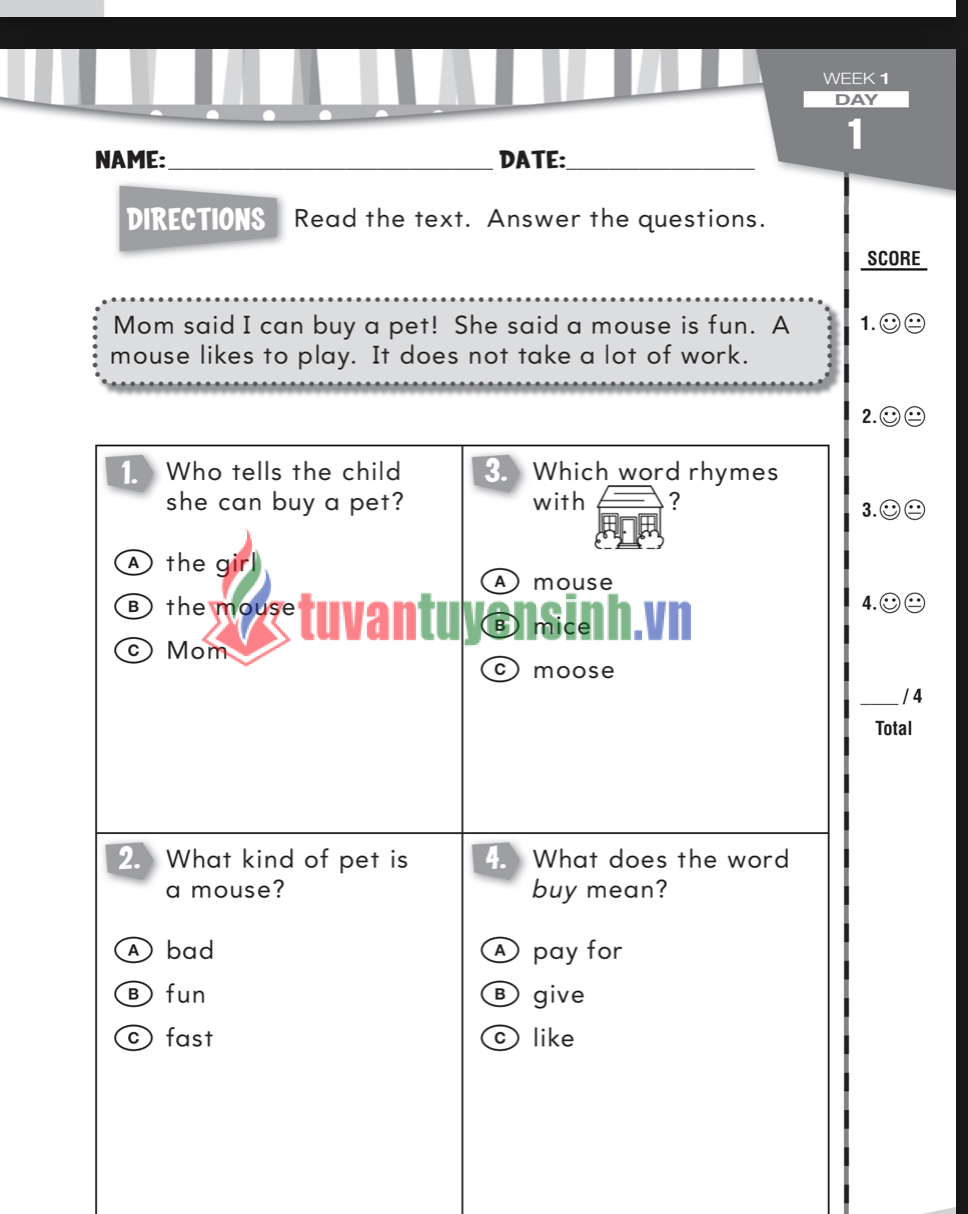
HOW TO USE THIS BOOK (cont.)Diagnostic AssessmentTeachers can use the practice pages as diagnostic assessments. The data analysis tools included with the book enable teachers or parents to quickly score students’ work and monitor their progress. Teachers and parents can see at a glance which reading concepts or skills students may need to target in order to develop proficiency.After students complete a practice page, grade each page using the answer key (pages 231–237). Then, complete the Practice Page Item Analysis for the appropriate day (pages 10–11) for the whole class, or the Student Item Analysis (pages 12–13) for individual students. These charts are also provided in the digital resources (filenames: G1_practicepage_analysis.pdf, G1_student_analysis.pdf). Teachers can input data into the electronic files directly on the computer, or they can print the pages and analyze students’ work using paper and pencil.To complete the Practice Page Item Analyses:• Write or type students’ names in the far-left column. Depending on the number of students, more than one copy of the form may be needed, or you may need to add rows.• The item numbers are included across the top of the charts. Each item correlates with the matching question number from the practice page.• For each student, record an X in the column if the student has the item incorrect. If the item is correct, leave the item blank.• Count the Xs in each row and column and fill in the correct boxes.To complete the Student Item Analyses:• Write or type the student’s name on the top row. This form tracks the ongoing progress of each student, so one copy per student is necessary.• The item numbers are included across the top of the chart. Each item correlates with the matching question number from the practice page.• For each day, record an X in the column if the student has the item incorrect. If the item is correct, leave the item blank.• Count the Xs in each row and column and fill in the correct boxes.8 #50922—180 Days of Reading for First Grade © Shell EducationHOW TO USE THIS BOOK (cont.)Using the Results to Differentiate InstructionOnce results are gathered and analyzed, teachers can use the results to inform the way they differentiate instruction. The data can help determine which concepts are the most difficult for students and which need additional instructional support and continued practice. Depending on how often the practice pages are scored, results can be considered for instructional support on a daily or weekly basis.Whole-Class SupportThe results of the diagnostic analysis may show that the entire class is struggling with a particular concept or group of concepts. If these concepts have been taught in the past, this indicates that further instruction or reteaching is necessary. If these concepts have not been taught in the past, this data is a great preassessment and demonstrates that students do not have a working knowledge of the concepts. Thus, careful planning for the length of the unit(s) or lesson(s) must be considered, and additional frontloading may be required.Small-Group or Individual SupportThe results of the diagnostic analysis may show that an individual or small group of students is struggling with a particular concept or group of concepts. If these concepts have been taught in the past, this indicates that further instruction or reteaching is necessary. Consider pulling aside these students while others are working independently to instruct further on the concept(s). Teachers can also use the results to help identify individuals or groups of proficient students who are ready for enrichment or above-grade-level instruction. These students may benefit from independent learning contracts or more challenging activities. Students may also benefit from extra practice using games or computer-based resources.Digital ResourcesReference page 239 for information about accessing the digital resources and an overview of the contents.© Shell Education #50922—180 Days of Reading for First Grade 9STANDARDS CORRELATIONSShell Education is committed to producing educational materials that are research and standards based. In this effort, we have correlated all of our products to the academic standards of all 50 United States, the District of Columbia, the Department of Defense Dependent Schools, and all Canadian provinces.How To Find Standards CorrelationsTo print a customized correlation report of this product for your state, visit our website at www.tcmpub.com/shell-education and follow the on-screen directions. If you require assistance in printing correlation reports, please contact Customer Service at 1-877-777-3450.Purpose and Intent of StandardsLegislation mandates that all states adopt academic standards that identify the skills students will learn in kindergarten through grade twelve. Many states also have standards for Pre-K. This same legislation sets requirements to ensure the standards are detailed and comprehensive.Standards are designed to focus instruction and guide adoption of curricula. Standards are statements that describe the criteria necessary for students to meet specific academic goals. They define the knowledge, skills, and content students should acquire at each level. Standards are also used to develop standardized tests to evaluate students’ academic progress. Teachers are required to demonstrate how their lessons meet state standards. State standards are used in the development of all of our products, so educators can be assured they meet the academic requirements of each state.College and Career ReadinessThe activities in this book are aligned to the college and career readiness (CCR) standards. The chart on page 4 lists each standard that is addressed in this product.TESOL and WIDA StandardsThe activities in this book promote English language development for English language learners.14 #50922—180 Days of Reading for First Grade © Shell EducationWEEK 1DAY 1NAME:________________________ DATE:________________________DIRECTIONS Read the text. Answer the questions.Mom said I can buy a pet! She said a mouse is fun. A mouse likes to play. It does not take a lot of work.

  • Who tells the child she can buy a pet?A the girlB the mouseC MomWhat kind of pet is a mouse?A badB funC fastWhich word rhymes with [hình ngôi nhà]?A mouseB miceC mooseWhat does the word buy mean?A pay forB giveC like

  • SCORE
  • ☺ ☹☺ ☹☺ ☹☺ ☹___ / 4 Total

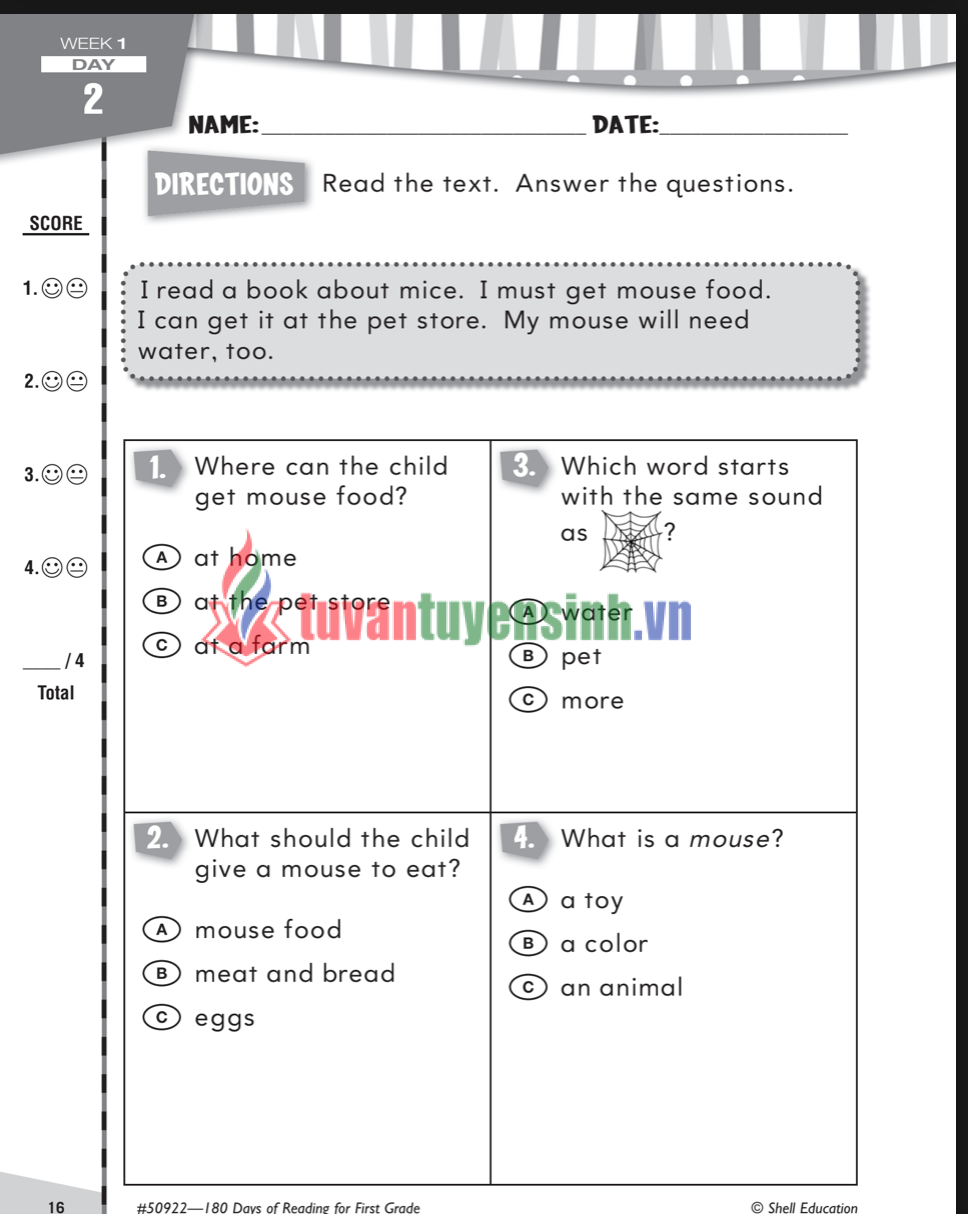
  • WEEK 1DAY 2NAME:________________________ DATE:________________________DIRECTIONS Read the text. Answer the questions.I read a book about mice. I must get mouse food. I can get it at the pet store. My mouse will need water, too.
  • Where can the child get mouse food?A at homeB at the pet storeC at a farmWhat should the child give a mouse to eat?A mouse foodB meat and breadC eggsWhich word starts with the same sound as [hình mạng nhện]?A waterB petC moreWhat is a mouse?A a toyB a colorC an animal

  • SCORE
  • ☺ ☹☺ ☹☺ ☹☺ ☹___ / 4 Total